
Search engine optimization is one of the most important long-term growth channels for any WordPress website. Whether you run a personal blog, a corporate website, an online store, a service-based business, or a content platform, your visibility in search engines directly affects how many potential visitors discover your site. The challenge is that SEO is no longer limited to adding a keyword to a title and writing a meta description. Modern SEO involves on-page optimization, technical SEO, structured data, site architecture, content quality, internal linking, crawlability, and performance. For many website owners, handling all of these areas consistently can become difficult very quickly.
This is where Boost SEO (Premium) becomes valuable. The plugin is designed to help WordPress users simplify the SEO process while still covering the most important optimization tasks. Instead of depending on scattered tools or manually checking every single page, users can rely on Boost SEO (Premium) to guide their SEO efforts, identify weaknesses, and support a more organized optimization workflow. That makes it especially useful for users who want better rankings but do not want SEO management to become overly technical or time-consuming.
In practical terms, many WordPress websites suffer from the same issues. Some have weak metadata across dozens of pages. Others publish content regularly but do not optimize headings, keyword placement, or internal links. ECommerce stores may have hundreds of product pages with inconsistent SEO structures. Service businesses often build good-looking websites but fail to optimize pages for the exact services and locations they want to rank for. A plugin like Boost SEO (Premium) can help address these weaknesses by giving users a clearer framework and more efficient tools.
For example, a local agency can use the plugin to optimize service pages for location-based searches. A blogger can improve article structure and SEO consistency without manually reviewing every detail. A WooCommerce store can work on product visibility by improving metadata and technical SEO elements at scale. In each case, the plugin supports not only rankings, but also workflow efficiency.
Another strong advantage is that SEO becomes easier to maintain over time. A website may start with ten pages, but later grow to fifty, one hundred, or several hundred. Without a consistent SEO system, quality often becomes uneven. Boost SEO (Premium) helps reduce that problem by creating a more repeatable optimization process.
In this article, we will explore Boost SEO (Premium) in detail, including what it is, its main features, the practical benefits it offers, how to install it, and why buying it from Pluginpro.org can be a smart choice for WordPress users who want premium functionality at a more affordable cost.
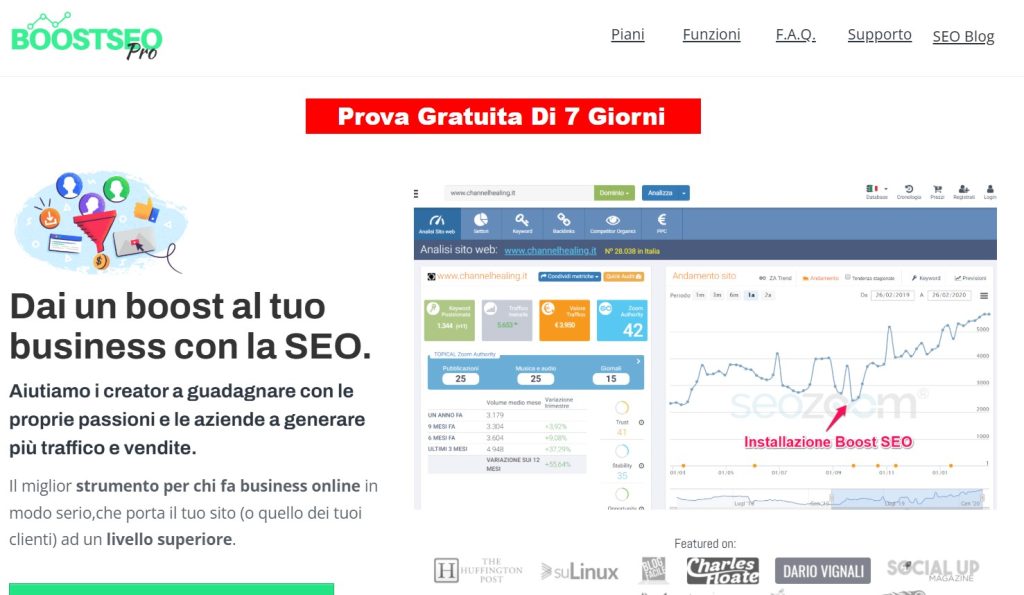
What is Boost SEO (Premium)?
Boost SEO (Premium) is a WordPress plugin built to help website owners improve their search engine optimization through a combination of analysis tools, automation features, technical settings, and content guidance. Instead of treating SEO as a collection of disconnected tasks, the plugin brings multiple optimization functions into one centralized system. This makes it easier for users to monitor, improve, and maintain SEO performance across their websites.
At its core, Boost SEO (Premium) acts as an SEO assistant inside WordPress. It helps users understand what needs improvement on each page and gives them tools to implement better SEO practices without requiring advanced technical skills. That is particularly useful because many site owners understand that SEO matters, but they often do not know how to apply it consistently. A plugin like this bridges the gap between SEO theory and practical implementation.
The plugin is useful for different types of WordPress users. Beginners can use it as a guide to follow SEO best practices more closely. Intermediate users can save time by automating routine tasks such as metadata handling or sitemap creation. Advanced users can use it as a workflow tool that reduces repetitive effort while still allowing manual control over important settings.
Real-world use cases show why this matters. Imagine a local dental clinic with a WordPress website. The clinic may have pages for services such as teeth whitening, dental implants, and emergency care, but those pages may not be properly optimized for local search terms. Boost SEO (Premium) can help identify missing metadata, weak headings, poor content structure, or technical SEO issues that limit visibility. In another example, a fashion store may have many product and category pages but inconsistent SEO implementation. The plugin can help standardize metadata, improve internal linking opportunities, and support better indexing.
Another defining aspect of Boost SEO (Premium) is convenience. Many site owners try to manage SEO by combining several plugins or manual checklists, which can create complexity and inconsistency. When one plugin can cover multiple SEO functions in a cleaner interface, it becomes easier to manage the overall strategy. This is not just about saving time. It also reduces the risk of overlooking important optimization tasks.
From a technical perspective, Boost SEO (Premium) may include features such as title and description controls, schema support, sitemap generation, content recommendations, internal linking tools, and performance-related improvements. These elements are all important because modern SEO depends on both content quality and technical readiness.
In practical terms, Boost SEO (Premium) is not simply a ranking tool. It is a system that helps users build a more structured SEO foundation for their WordPress website. Rather than making random improvements page by page, users can approach SEO in a more organized and scalable way.
Key Features of Boost SEO (Premium)
- Comprehensive on-page SEO analysis
One of the main features of Boost SEO (Premium) is its ability to analyze pages and posts in detail. This helps users identify issues related to keyword usage, heading structure, content organization, readability, and metadata. Instead of guessing whether a page is well optimized, users get more direct feedback on what needs improvement. For example, if a service page has weak heading hierarchy or lacks keyword relevance in important areas, the plugin can highlight those issues so they can be corrected more efficiently. - Automated metadata optimization
Writing meta titles and descriptions manually for every page can be time-consuming, especially on large websites. Boost SEO (Premium) helps streamline this process with automated metadata features that can generate or standardize SEO fields more efficiently. This is useful for blogs with hundreds of posts or eCommerce stores with many products and category pages. Automation does not eliminate the need for strategy, but it gives users a solid baseline and saves significant time. - Schema markup support
Structured data is an important part of modern SEO because it helps search engines understand the type and context of content on a page. Boost SEO (Premium) can support schema implementation so that pages are more clearly interpreted by search engines. For instance, a product page may use schema to highlight pricing and availability, while an article page may be structured for better search presentation. This feature matters because it can improve search result appearance and strengthen content clarity for indexing systems. - Internal linking recommendations
Internal links help search engines crawl a website more effectively and help users move naturally between related content. However, many site owners forget to build internal links strategically. Boost SEO (Premium) can provide recommendations for connecting related pages or posts, helping users improve site structure. For example, a blog post about technical SEO can link to related posts about XML sitemaps, page speed, or schema. This creates stronger content relationships and helps distribute authority more evenly across the website. - XML sitemap generation
A sitemap helps search engines discover the pages on a website more efficiently. Boost SEO (Premium) typically supports XML sitemap generation, which is especially useful for growing sites with large content libraries. When new posts, product pages, or landing pages are published, sitemap support makes it easier for search engines to find and index them. This is a foundational feature that supports crawlability and technical SEO health. - Content optimization tools
Content quality is central to SEO, and Boost SEO (Premium) helps users optimize written content more effectively. This can include readability suggestions, keyword placement guidance, content structure improvements, and recommendations for better formatting. For example, if an article has long dense paragraphs and weak subheading use, the plugin may help guide the user toward a more readable and SEO-friendly layout. These content tools are especially useful for writers and editors who want to balance search optimization with user experience. - Performance and speed-related support
Website speed affects both rankings and user engagement. A slow website can hurt SEO even if the content is strong. Boost SEO (Premium) may include tools or recommendations related to performance improvement, such as reducing unnecessary elements, improving page efficiency, or supporting technical cleanup. This matters because search engines increasingly reward websites that load quickly and deliver a smoother user experience. - Analytics and tracking integration
Good SEO requires measurement, not just implementation. Boost SEO (Premium) may support integration with analytics tools so users can monitor traffic trends, performance changes, and optimization impact. This helps users understand whether their SEO efforts are producing results. For example, a business can compare how optimized service pages perform before and after improvement, while a blogger can track which content updates lead to better search visibility. - Flexible SEO settings for different site types
Not every website has the same SEO priorities. A local business site, a publisher, and an eCommerce store all need different approaches. Boost SEO (Premium) becomes more useful when it gives users flexible settings they can adapt to their own goals. This allows site owners to create a more customized SEO system rather than applying the same generic rules to every page. - Ongoing updates and compatibility support
SEO plugins need to remain compatible with WordPress updates, search engine changes, and evolving website technologies. Regular updates make a plugin more dependable over time. For users who want a long-term SEO solution, maintenance and compatibility support are just as important as the original feature list.
Benefits of Using Boost SEO (Premium)
One of the biggest benefits of using Boost SEO (Premium) is improved search visibility. A website that is better optimized across titles, metadata, structure, internal links, and technical settings has a stronger chance of ranking for relevant search queries. While no plugin can guarantee rankings, a good SEO plugin can remove many of the common weaknesses that prevent pages from performing well.
Another major benefit is consistency. This is especially important for growing websites. A business may begin with only a few pages and optimize them manually, but as new pages are added, it becomes harder to maintain the same SEO standard everywhere. Boost SEO (Premium) helps users create a more repeatable process so optimization quality does not become uneven.
Time savings are also significant. Manual SEO work across dozens or hundreds of pages can be exhausting. A plugin that automates metadata tasks, highlights content weaknesses, and supports technical SEO settings can reduce hours of work. This is especially beneficial for agencies, marketing teams, and store owners who already manage many responsibilities.
The plugin also helps reduce avoidable mistakes. Some website owners miss critical issues such as missing meta descriptions, weak heading structure, broken internal linking logic, or pages that are difficult for search engines to crawl. By surfacing these problems more clearly, Boost SEO (Premium) helps users take corrective action before those issues hurt performance further.
Another benefit is better content quality. Content optimization tools encourage clearer formatting, stronger keyword alignment, and more readable page structures. This improves not only SEO but also user experience. Visitors are more likely to stay on a page that is easy to scan and understand, which can support better engagement metrics.
From a business perspective, better SEO often leads to more qualified traffic. An optimized service page is more likely to attract users who are actively searching for that service. An optimized product page is more likely to reach users with buying intent. That means SEO improvements do not just support traffic volume. They also improve traffic relevance.
In real-world use, a travel blogger might use the plugin to strengthen destination pages and supporting articles. A law firm might use it to optimize practice-area pages and local landing pages. A WooCommerce store can use it to standardize metadata and improve category visibility. Across these different examples, the core benefits remain the same: more organized optimization, better efficiency, and stronger long-term SEO foundations.
How to Install Boost SEO (Premium)
Installing Boost SEO (Premium) on a WordPress website is usually a straightforward process, and most users can complete it in just a few steps. The first step is to obtain the plugin file from a trusted source. Once you have the ZIP file, log in to your WordPress admin dashboard and navigate to the Plugins section.
From there, click Add New and then choose Upload Plugin. Select the Boost SEO (Premium) ZIP file from your computer, upload it, and click Install Now. After WordPress finishes the installation, click Activate to enable the plugin on your site. At that point, the plugin should appear in your dashboard menu or settings area.
However, installation is only the beginning. Proper setup is what determines whether the plugin will deliver real value. After activation, go through the plugin settings carefully. Review general SEO options, metadata templates, schema settings, sitemap generation, and any performance-related recommendations. Different websites have different needs, so it is important not to assume that default settings will always be ideal.
A good practical approach is to start by optimizing a few important pages first. For example, a business website might begin with the homepage, primary service pages, and contact page. A blog might begin with top-performing posts. An online store might focus first on major product categories and a few best-selling products. This helps you understand how the plugin behaves in real conditions before applying settings across the entire site.
You should also test the website after setup. Check whether metadata displays correctly, confirm that sitemaps are functioning, and make sure the plugin is not conflicting with your theme or other plugins. If the plugin includes content analysis tools, review a few pages and compare its recommendations against your SEO goals.
Another important step is to connect any analytics or tracking integrations if available. This helps turn the plugin from a setup tool into an ongoing SEO monitoring system. Over time, you can use the plugin not just to install SEO settings, but to refine your content and technical structure based on actual performance data.
Finally, keep the plugin updated. A premium SEO plugin needs regular updates to remain compatible with WordPress, search engine expectations, and modern site structures. Combined with routine site backups, this helps keep your SEO framework stable over time.
Why Buy Boost SEO (Premium) at Pluginpro.org
Buying Boost SEO (Premium) at Pluginpro.org can be a smart choice for WordPress users who want premium plugin functionality while keeping costs under control. One of the biggest reasons is affordability. Users can often save up to 95% compared to official pricing, which makes premium SEO tools more accessible to freelancers, business owners, agencies, and developers managing multiple sites.
Another important reason is access to 100% clean files. This is critical because SEO plugins operate at a deep structural level within WordPress. A compromised or poorly packaged plugin can create security risks, compatibility issues, or technical instability. Clean files help reduce those risks and give users greater confidence when installing the plugin on business-critical websites.
Unlimited website usage is another major advantage. Many official premium licenses only allow installation on a limited number of sites. That can become expensive quickly for agencies or anyone working across multiple projects. Pluginpro.org offers more flexibility, which can be especially valuable for developers and marketers who build or manage several WordPress websites at the same time.
Easy updates also add to the value. SEO is not static. WordPress changes, plugins evolve, and search engines refine their expectations. A premium plugin needs to remain current to stay useful. Straightforward update access makes long-term plugin use far more practical, particularly for users who want to maintain a stable SEO setup over time.
Secure downloads are another meaningful benefit. A smooth and dependable download process matters when users need to install or deploy a plugin quickly, especially in agency or business environments. Reliable delivery reduces friction and helps users move from purchase to setup without unnecessary delay.
There is also a broader workflow advantage. Most WordPress professionals do not rely on only one premium plugin. A website may also require tools for forms, page building, eCommerce, translation, or performance optimization. Paying full price for every premium tool can increase project costs substantially. Pluginpro.org helps make premium plugin stacks more affordable overall.
In practical terms, a freelancer can use Boost SEO (Premium) to improve client sites without raising project costs too much. A small business can access advanced SEO support without stretching its software budget. An agency can deploy the plugin across multiple sites more efficiently. These are direct operational benefits, not just theoretical savings.
For users who care about affordability, flexibility, clean files, secure downloads, and practical long-term value, Pluginpro.org offers a compelling option for purchasing Boost SEO (Premium).
Conclusion
Boost SEO (Premium) is a practical WordPress plugin for users who want a more organized, scalable, and efficient approach to search engine optimization. Instead of treating SEO as a scattered set of manual tasks, the plugin helps bring multiple optimization functions into one structured system. That makes it useful for blogs, business websites, eCommerce stores, agencies, and content-driven platforms.
Its main strengths lie in on-page analysis, metadata support, schema features, internal linking guidance, sitemap generation, content optimization, and broader SEO workflow efficiency. These tools help users improve not only rankings potential, but also the consistency and quality of optimization across the site.
The plugin is especially valuable for websites that are growing. As the number of pages increases, SEO becomes harder to manage manually. Boost SEO (Premium) helps users maintain better standards while saving time and reducing avoidable errors. That makes it a strong option for both beginners who need guidance and experienced users who want faster execution.
When purchased through Pluginpro.org, the plugin becomes even more attractive from a value perspective. The combination of significant cost savings, clean files, unlimited website usage, easy updates, and secure downloads makes it a practical choice for WordPress professionals and business owners alike.
If you want to build a stronger SEO foundation for your WordPress website and streamline the way optimization is managed, Boost SEO (Premium) is well worth considering.