The freelance economy has changed how people work, hire, and build businesses. Instead of relying only on traditional employment models, companies now hire independent professionals for design, development, writing, marketing, consulting, virtual assistance, and many other services. At the same time, freelancers increasingly want platforms where they can showcase skills, attract clients, and manage projects efficiently. This shift has created strong demand for freelance marketplaces, job platforms, and niche service directories. That is exactly where Freeio becomes highly relevant.
Building a freelance marketplace is very different from building a normal business website. A simple corporate theme may be enough for presenting services and collecting inquiries, but it will not support the two-sided workflow that a marketplace needs. A freelance platform has to serve two different audiences at once: clients and service providers. Each of these groups has different goals, different dashboard needs, and different actions they want to take. A client wants to post jobs, browse talent, compare offers, and manage projects. A freelancer wants to build a profile, showcase work, list services, submit proposals, and receive orders. If the website structure does not support both sides clearly, the platform quickly becomes frustrating to use.
This is why a dedicated marketplace theme matters. Freeio is not just designed to look modern. It is built around the actual workflows required by service marketplaces. Instead of forcing site owners to piece together dozens of separate tools and custom code, Freeio provides a more complete framework for launching a freelance platform in WordPress.
This is especially valuable for entrepreneurs and agencies trying to enter niche markets. Not every platform needs to compete with global giants like Upwork or Fiverr. In many cases, the strongest business model is a focused marketplace for a specific industry or region. For example, someone may want to build a freelance site only for legal writers, healthcare consultants, UI/UX designers, local translators, or real estate marketing specialists. A specialized marketplace can be easier to brand, easier to promote, and more attractive to a clearly defined audience.
Freeio helps support this type of model by providing the structural building blocks of a marketplace. Instead of spending months building user roles, service listing flows, project submission forms, and profile pages from scratch, users can start with a purpose-built theme and customize it for their niche.
Another important point is speed to launch. Marketplace ideas often depend on testing demand. A founder may want to launch quickly, onboard early users, gather feedback, and refine the platform over time. A theme like Freeio reduces the initial technical barrier and helps move the project from concept to live website much faster.
There is also a trust factor. Marketplaces only work when both sides feel confident using the platform. Clients need to trust that service providers look credible and professional. Freelancers need to trust that the site is well organized and worth joining. A polished and structured theme helps create that first layer of trust.
In this article, we will explore Freeio in detail, including what it is, its key features, practical benefits, installation process, and why purchasing it from Pluginpro.org is a smart and cost-effective decision.
What is Freeio?
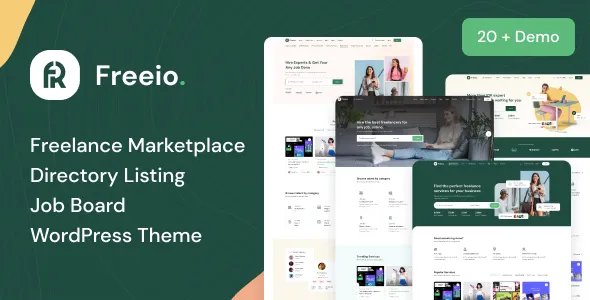
Freeio is a premium WordPress theme designed specifically for building freelance marketplaces, gig platforms, job-based service directories, and hiring websites. Its main purpose is to provide a complete framework where clients and freelancers can interact through service listings, job postings, proposals, and project workflows.
At a practical level, Freeio is built to support the core structure of a service marketplace. This usually includes multiple user roles, profile systems, job posting areas, service listing pages, search and filtering, messaging or communication features, and other marketplace-related elements. Unlike a standard theme that only controls visual styling, Freeio is focused on workflow design as well.
This is important because a freelance website is not only about content display. It is about how people use the platform. A freelancer needs to create a profile, describe their expertise, upload work samples, list services, and manage incoming requests. A client needs to create an account, browse available providers, post a project, review proposals, and make hiring decisions. A useful marketplace theme has to support both sides of that system clearly and consistently.
Freeio is especially suitable for:
- freelance marketplaces
- niche service platforms
- remote work hiring portals
- project-based job boards
- gig economy websites
- professional talent directories
- internal contractor hiring systems
A practical example makes its role easier to understand. Imagine an entrepreneur wants to build a marketplace for freelance digital marketers. The site needs freelancer profiles, service categories like SEO, paid ads, content marketing, and email automation, along with client job posting and proposal features. Freeio provides a framework for that kind of system without requiring a fully custom build.
Another example would be a regional hiring platform for remote software developers. Instead of offering all service types, the site could focus only on programmers, QA specialists, and DevOps consultants. Freeio’s marketplace structure makes that kind of focused platform much easier to launch.
The theme is also useful for agencies that build client marketplaces. A web agency may have clients who want an internal talent platform, a vertical service marketplace, or a branded outsourcing portal. Using a niche-ready theme like Freeio can reduce development time significantly.
Another important characteristic of Freeio is flexibility. Although it is designed for freelance platforms, different business models can still use the framework differently. One website may focus on job postings and bidding. Another may focus on predefined service packages like gig listings. Another may combine both. This makes the theme useful across several marketplace strategies.
Overall, Freeio is best understood as a marketplace-focused WordPress theme that helps site owners build platforms where freelancers and clients can connect, interact, and manage service relationships more effectively.
Key Features of Freeio
Freeio includes features that are specifically valuable for marketplace and freelance platform workflows. Its usefulness comes from how these features work together to support a two-sided ecosystem rather than a standard one-direction website.
- Freelancer and client user roles
One of the most important features of Freeio is support for separate user roles. A marketplace works best when freelancers and clients each have their own type of account experience. Freelancers need profile tools, portfolio visibility, and service management. Clients need project posting tools, hiring controls, and browsing functionality. By separating these roles clearly, Freeio helps make the platform easier to understand and use. For example, a freelancer dashboard might focus on proposals and profile completion, while a client dashboard focuses on active projects and incoming bids. - Job posting and proposal or bidding workflow
Many freelance marketplaces depend on a job posting model where clients submit project requirements and freelancers apply. Freeio supports this type of workflow by allowing job listings and freelancer responses. This is useful because many industries, such as development, consulting, and writing, still rely heavily on project-based hiring rather than fixed gig purchases. For example, a client may post a request for a website redesign, and several freelancers can submit proposals with price, timeline, and experience details. - Service listing or gig-style functionality
In addition to job posting, some marketplaces rely on a productized service model where freelancers list predefined offerings. This is similar to how gig platforms work. Freeio supports this kind of service structure, which can be useful for categories such as logo design, content writing, SEO audits, or video editing. For example, a freelancer can create a listing like “I will design a modern landing page” with a fixed price and turnaround time. This helps the platform serve clients who prefer straightforward service shopping rather than open bidding. - Detailed freelancer profile management
A freelance marketplace needs trust, and trust begins with profiles. Freeio is useful because it provides structure for freelancers to present their skills, experience, services, and portfolio pieces. A strong profile system helps clients evaluate who they may want to hire. For example, a graphic designer profile may include service categories, past projects, software expertise, and client feedback. A better profile experience improves platform credibility and decision-making. - Search, filtering, and discovery tools
Marketplaces become harder to use as they grow unless users can find what they need efficiently. Freeio supports this by making freelancer or service discovery easier through structured browsing and filtering. For example, clients may want to search by category, budget, experience level, location, or rating. A niche platform with hundreds of users becomes much more usable when discovery tools are strong. This also improves the business value of the site because it helps clients reach relevant providers faster. - Dashboard-based user experience
Marketplaces need more than frontend listings. Users need account areas where they can manage activity. Freeio becomes much more practical because it supports dashboard-style workflows for both freelancers and clients. For example, a freelancer can manage proposals, orders, profile updates, and saved jobs from one place. A client can review posted projects, track proposals, and manage hired freelancers. This type of structured dashboard environment makes the platform feel much more complete. - Monetization and payment potential
A marketplace website usually needs a business model. Freeio supports monetization-oriented workflows that can be paired with payment systems, paid listings, commissions, or premium access depending on how the site owner structures the platform. For example, a marketplace may charge freelancers to feature their profiles, charge clients to post jobs, or earn through service transaction commissions. While the exact monetization setup depends on the site owner’s strategy, the theme provides a better starting point than a generic WordPress layout. - Responsive and modern interface design
Since both freelancers and clients often browse opportunities on mobile devices, responsive design is essential. Freeio supports a modern interface that adapts across desktop, tablet, and mobile. This matters because users may apply for jobs, review freelancer profiles, or send messages from phones. A marketplace theme that performs well only on desktop loses a significant part of its usability. Responsive structure helps keep the platform practical across real-world usage scenarios.
Benefits of Using Freeio
One of the biggest benefits of using Freeio is that it significantly reduces the complexity of launching a freelance marketplace. Building a two-sided platform from scratch is difficult. It requires not just design work, but workflow design, user role handling, listing logic, and account structure. Freeio gives site owners a much stronger starting point, which can save a great deal of time and cost.
Another major benefit is faster go-to-market execution. Many entrepreneurs with marketplace ideas need to test their concept quickly. They do not want to spend months on a fully custom product before validating demand. Freeio helps support a quicker launch process so founders can focus on onboarding users, refining the offer, and learning from real activity.
Freeio also improves user trust. A freelance marketplace succeeds only if both freelancers and clients feel comfortable participating. The theme’s marketplace-oriented layout helps present profiles, listings, and workflows in a way that feels more professional than a generic business theme trying to imitate a platform. This stronger first impression can help with user acquisition.
Another important benefit is business model flexibility. Some marketplaces want job posting and bidding. Others want fixed gig packages. Some want both. Freeio’s structure makes it easier to explore different platform strategies without rebuilding the entire site architecture. This is especially valuable for niche marketplaces still refining how they want users to transact.
There is also a strong usability benefit. Because the theme is built for marketplace workflows, the user journey is usually clearer than it would be with a standard theme. Freelancers know where to complete their profiles and submit proposals. Clients know where to browse talent and post jobs. This clarity reduces friction and can improve engagement.
The theme also helps create a more scalable platform foundation. A site may begin with a few dozen users, but if it grows, the structure of the platform matters even more. A strong marketplace theme makes it easier to add more categories, more services, and more activity without the site feeling chaotic too quickly.
Another benefit is reduced development cost. Instead of hiring developers to build core marketplace pages and dashboards from nothing, site owners can invest more selectively in branding, niche functionality, or user acquisition. This can make the project much more feasible for startups and smaller businesses.
Finally, Freeio helps agencies deliver marketplace projects more efficiently. If an agency regularly works with platform ideas, a theme like this can become part of a repeatable workflow that reduces project turnaround time while still leaving room for customization.
How to Install Freeio
Installing Freeio is generally a standard WordPress theme process, but since it is a marketplace-oriented theme, setup is more than just activation. It is important to configure the platform structure carefully after installation.
The easiest installation method is through the WordPress dashboard. First, download the Freeio theme ZIP file. Then log in to your WordPress admin area and go to Appearance > Themes. Click Add New, then choose Upload Theme. Select the ZIP file and click Install Now. Once the installation is complete, click Activate.
After activation, the next step is to install any required or recommended plugins. Themes like Freeio usually depend on companion plugins for marketplace workflows, page building, demo content, or user dashboards. These plugins are often essential for making the platform function as intended, so they should be installed before heavy customization begins.
If demo import is available, it is often the best place to start. A demo setup can provide a ready-made structure for freelancer profiles, job listings, homepage sections, and search tools. This saves time and gives site owners a clearer view of how the platform can work before replacing the sample content with real categories and users.
Manual installation is also possible. Extract the ZIP file on your computer, then upload the theme folder to the wp-content/themes directory using FTP. After that, return to the WordPress dashboard, go to Appearance > Themes, and activate Freeio there.
Once the theme is active, configure the core marketplace settings. This includes defining user roles, deciding whether the platform will use job posts, service listings, or both, setting category structures, and reviewing account and dashboard behavior. This planning stage matters because the marketplace experience depends on workflow clarity.
It is also wise to define your niche early. For example, if you are building a freelance marketplace for legal consultants, design the taxonomy, service names, and homepage messaging around that market from the beginning. Freeio works best when the platform is structured clearly rather than left overly broad without direction.
After setup, test the user journey from both sides. Create one client account and one freelancer account. Make sure freelancers can build profiles, clients can post jobs, services are searchable, and dashboard workflows make sense. This step is crucial because marketplace themes must be evaluated by interaction quality, not just by appearance.
A good installation process is not just about making the theme live. It is about setting up a platform structure that supports real user behavior from day one.
Why Buy Freeio at Pluginpro.org
Buying Freeio at Pluginpro.org offers several practical advantages for WordPress users, agencies, and founders building freelance marketplaces.
One of the biggest benefits is cost savings. Marketplace themes can be expensive, especially when the project already involves additional costs for hosting, plugins, branding, payment integrations, and possibly platform marketing. Pluginpro.org helps make the theme more accessible by offering the opportunity to save up to 95% compared to the original price.
Another important advantage is access to 100% clean files. This matters because a marketplace website is a business-critical platform. Themes installed on such sites should come from a source that users can trust. Clean files help reduce the risk of malware, hidden code, or compromised packages that could affect performance or security.
Unlimited website usage is another strong benefit. Agencies and developers often work on multiple marketplace projects, and entrepreneurs may run multiple niche brands. A theme that can be used across several websites offers much better long-term value than a restrictive single-site purchase.
Pluginpro.org also offers easy updates, which is important because WordPress, plugins, and marketplace-related tools evolve over time. Better access to updates helps keep the theme compatible and supports longer-term platform maintenance.
Finally, secure downloads improve trust in the buying process. Users need confidence that the files they receive are safe, complete, and ready to deploy. That reliability matters even more when the theme is being used for a live platform where freelancers and clients will interact.
For anyone looking to launch a freelance marketplace without overspending on the theme layer, Pluginpro.org provides a compelling value proposition.
Conclusion
Freeio is a highly practical WordPress theme for anyone building a freelance marketplace, service platform, or niche hiring site. It goes beyond visual presentation by supporting the actual workflows that matter in a two-sided marketplace: freelancer profiles, client accounts, job posting, service listings, search, and user dashboards.
Its value becomes clear in real-world use. Instead of trying to turn a generic theme into a platform, users can begin with a structure already designed for freelance interactions. That saves time, reduces development friction, and creates a more credible experience for both clients and service providers.
The benefits are significant. Faster launch, lower development cost, stronger trust, better role-based workflows, more business model flexibility, and greater scalability all make Freeio a strong option for startup founders, agencies, and marketplace builders.
When purchased through Pluginpro.org, Freeio becomes even more attractive because of the substantial cost savings, clean files, unlimited website usage, easy updates, and secure downloads.
For anyone looking to build a WordPress-based freelance marketplace or service platform, Freeio is definitely worth serious consideration.