
OxyProps is a specialized WordPress plugin designed to extend the capabilities of Oxygen Builder by introducing advanced dynamic data handling, custom fields integration, and flexible property control. From the first interaction, OxyProps positions itself as a powerful enhancement layer rather than a standalone tool—it helps developers and designers unlock deeper control over how content is structured and displayed.
As modern WordPress sites increasingly rely on dynamic content, traditional page builders can become limiting when handling complex data relationships or custom fields. OxyProps addresses this gap by enabling users to connect dynamic data directly into design elements, making it easier to build scalable and highly customizable websites.
For developers, OxyProps reduces the need for custom PHP or JavaScript when working with dynamic content. For designers, it provides intuitive controls that allow complex data-driven layouts to be created visually. This balance makes it particularly useful for agencies, freelancers, and advanced WordPress users working with Oxygen Builder.
In real-world scenarios, OxyProps helps streamline workflows by simplifying how dynamic data is integrated into layouts. For example, a directory website can display custom fields dynamically across templates, while an eCommerce site can showcase product-specific data without manual duplication.
Another practical example involves content-heavy websites where multiple post types and custom fields are used. Instead of manually configuring each element, OxyProps allows users to bind data dynamically, ensuring consistency and reducing repetitive work.
In more advanced implementations, OxyProps becomes a core part of the development workflow. Teams can build reusable components that automatically pull in the correct data based on context, allowing them to scale projects more efficiently without increasing complexity.
A deeper workflow example can be seen in agency environments where multiple developers collaborate on large projects. By using OxyProps, teams can standardize how data is structured and displayed, ensuring that every component behaves predictably across different templates. This reduces miscommunication and speeds up development cycles.
Another practical situation involves redesigning existing websites. Instead of rebuilding layouts manually, OxyProps allows developers to connect existing data structures to new templates quickly, making redesign projects faster and more efficient.
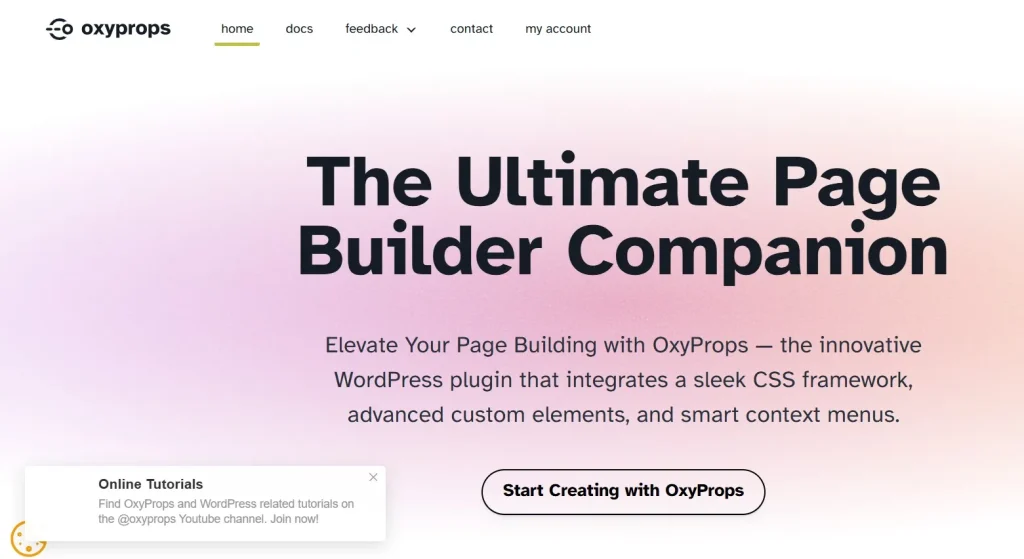
What is OxyProps?
OxyProps is an extension plugin for Oxygen Builder that enhances its dynamic data capabilities, allowing users to work more effectively with custom fields, metadata, and complex data structures. It acts as a bridge between content and design, enabling seamless integration of dynamic information into visual layouts.
At its core, OxyProps allows users to map data sources—such as custom fields created with tools like ACF or Meta Box—directly into Oxygen elements. This eliminates the need for manual coding and makes it easier to build dynamic templates.
A common use case for OxyProps is in directory or listing websites. For example, a real estate site can display property details such as price, location, and features dynamically across multiple pages using a single template. This significantly reduces development time and ensures consistency.
Agencies also benefit from OxyProps when building client websites that require scalable content structures. Instead of creating separate layouts for each page, they can design templates that automatically adapt based on the data provided.
For eCommerce platforms, OxyProps can be used to display product-specific information dynamically. For instance, additional product attributes or custom descriptions can be integrated into layouts without modifying each product page individually.
Content creators and publishers use OxyProps to manage large volumes of content efficiently. For example, a blog with multiple categories and custom fields can display tailored layouts for each post type without manual adjustments.
In more advanced scenarios, OxyProps is used to build fully dynamic systems such as job boards, event listings, or membership directories. By connecting structured data to design elements, users can create complex platforms without relying heavily on custom development.
Another practical example involves multilingual or multi-region websites. OxyProps can dynamically pull localized content fields into templates, ensuring that users see relevant information based on their region or language settings.
Additionally, OxyProps is often used in SaaS-style WordPress platforms where structured data is essential. For instance, a platform offering user-generated listings can dynamically render each listing page using a single template, reducing development overhead.
Key Features of OxyProps
- Advanced Dynamic Data Binding
OxyProps allows users to bind dynamic data from custom fields directly into Oxygen Builder elements.
For example, a property listing can automatically display price, location, and features pulled from custom fields.
This reduces manual input and ensures consistency across pages.
In practice, developers can create a single template that adapts to hundreds of entries, significantly reducing workload.
Another real-world scenario includes dynamically displaying user-generated content, such as reviews or testimonials, without manual updates. - Custom Fields Integration
The plugin integrates seamlessly with popular custom field tools such as ACF and Meta Box.
This allows users to structure content in a flexible way and display it dynamically within designs.
For instance, a service website can display custom pricing tables or feature lists based on field data.
This integration simplifies content management and improves scalability.
Businesses can also use this feature to create modular content blocks that can be reused across different pages. - Reusable Dynamic Components
OxyProps enables the creation of reusable components that automatically adapt based on context.
This is particularly useful for building consistent layouts across large websites.
For example, a testimonial section can dynamically pull different content for each page while maintaining the same design.
This reduces duplication and improves maintainability.
Teams can also create component libraries that speed up future development projects. - Conditional Display Logic
Users can define conditions for when certain elements should be displayed.
For example, a discount badge can appear only if a product has a sale price.
This allows for more intelligent and responsive designs.
In real-world applications, conditional logic helps create personalized user experiences.
Another example includes showing location-based content depending on the user’s region. - Flexible Property Controls
OxyProps provides enhanced control over element properties, allowing users to customize how data is displayed.
For instance, users can format dynamic values such as dates, prices, or text fields directly within the builder.
This eliminates the need for additional plugins or custom code.
It also ensures that data is presented consistently across the site.
Advanced formatting options allow developers to tailor outputs for different contexts, such as summaries or detailed views. - Loop and Repeater Support
The plugin supports loops and repeaters, making it easier to display lists of dynamic content.
For example, a blog can display related posts or featured articles dynamically.
This is essential for content-heavy websites.
In practice, loops allow users to build complex layouts such as grids and listings with minimal effort.
Another use case includes displaying event schedules or product variations dynamically. - Performance Optimization
OxyProps is designed to work efficiently within Oxygen Builder, ensuring that dynamic content does not slow down the site.
This is particularly important for large-scale websites with extensive data.
Optimized performance ensures a smooth user experience.
In high-traffic environments, this helps maintain stability and prevents bottlenecks. - Developer-Friendly Architecture
While user-friendly, OxyProps also supports advanced customization for developers.
This allows teams to extend functionality as needed without being restricted by the plugin’s interface.
Developers can integrate custom logic while still benefiting from the plugin’s core features.
This flexibility makes it suitable for both simple and highly complex projects.
Benefits of Using OxyProps
Using OxyProps significantly improves how dynamic content is managed within WordPress. One of the most important benefits is efficiency. By automating data integration, users can reduce manual work and focus on design and strategy.
Another key advantage is scalability. Websites built with OxyProps can easily handle large amounts of content without requiring additional development. Templates can be reused and adapted automatically, saving time and resources.
Performance is also improved because the plugin is optimized for Oxygen Builder. Instead of relying on multiple plugins, users can manage dynamic content within a single system, reducing overhead.
From a workflow perspective, OxyProps simplifies collaboration between developers and designers. Developers can structure data, while designers can focus on layout and presentation, creating a more efficient production process.
In real-world business scenarios, these benefits lead to faster project delivery and reduced costs. Agencies can take on more projects without increasing workload, while businesses can maintain their websites more easily.
Another important benefit is consistency. Dynamic templates ensure that content is displayed uniformly across the site, maintaining a professional appearance.
Additionally, OxyProps allows for faster iteration. Changes to a single template can be applied across multiple pages instantly, making it easier to update content and design elements.
A deeper operational benefit is improved maintainability. As websites grow, maintaining consistent data structures becomes more challenging. OxyProps helps standardize these structures, making long-term maintenance easier and more predictable.
Real Use Cases of OxyProps
OxyProps is widely used in dynamic website development. In directory websites, it allows users to display structured data such as listings, reviews, and ratings automatically.
Agencies use OxyProps to build scalable client websites with reusable templates, reducing development time and ensuring consistency.
Content platforms benefit from dynamic layouts that adapt based on post types and categories, improving user experience.
eCommerce sites use OxyProps to display product-specific data dynamically, enhancing product pages without manual updates.
Membership platforms can use it to display personalized content based on user roles or subscriptions.
Another practical use case involves job boards, where listings are dynamically generated from custom fields, allowing for efficient content management.
Additionally, event websites can use OxyProps to display schedules, locations, and speaker information dynamically, ensuring that updates are reflected across all pages instantly.
Another advanced scenario involves SaaS platforms that rely on structured user data. OxyProps can dynamically render dashboards, profiles, and content feeds based on user input, creating a fully interactive experience.
How to Install OxyProps
Installing OxyProps is a straightforward process for WordPress users familiar with Oxygen Builder.
First, download the OxyProps plugin file from a trusted source such as Pluginpro.org.
Next, log in to your WordPress dashboard and navigate to Plugins. Click “Add New,” then select “Upload Plugin,” and choose the OxyProps ZIP file.
Click “Install Now” and wait for the installation to complete. Once installed, activate the plugin.
After activation, OxyProps will integrate directly into Oxygen Builder. Users can access its features while editing pages and templates.
It is recommended to start by connecting custom fields and testing dynamic data binding within a simple template.
Many users also create a staging environment to experiment with configurations before applying them to a live site.
Another useful step is documenting how dynamic fields are mapped within templates. This ensures that teams can maintain and update the system efficiently over time.
Additionally, testing different scenarios—such as conditional logic and loops—helps ensure that workflows behave correctly before deployment.
Why Buy OxyProps at Pluginpro.org
Buying OxyProps from Pluginpro.org offers significant advantages for both individuals and agencies. One of the most notable benefits is cost savings, with users able to save up to 95% compared to standard licensing.
Another key advantage is unlimited website usage. This allows agencies to deploy OxyProps across multiple client projects without additional costs, making it a highly scalable solution.
Security is also a major consideration. Pluginpro.org provides clean and safe files, ensuring that your website remains stable and protected.
Ease of updates is another benefit. Users can access updates conveniently, helping maintain compatibility with Oxygen Builder and other tools.
In real-world scenarios, these benefits translate into operational efficiency. Agencies can standardize their development stack and reduce licensing management complexity.
Startups and freelancers benefit from lower upfront costs, allowing them to access advanced functionality without exceeding their budget.
Another important advantage is workflow consistency. Using the same plugin across projects ensures predictable performance and simplifies troubleshooting.
A deeper benefit appears when scaling operations. As agencies grow and onboard new clients, they can deploy OxyProps instantly without negotiating new licenses or increasing costs. This allows for faster project delivery and improved profitability.
Additionally, Pluginpro.org enables experimentation without financial pressure. Teams can test advanced dynamic data setups, refine templates, and optimize workflows before fully implementing them across projects.
Another practical scenario involves long-term client maintenance. Agencies can manage updates and plugin usage from a centralized source, reducing administrative overhead and ensuring consistent performance across all websites.
Is OxyProps Worth It?
Yes, OxyProps is worth it for users who work with Oxygen Builder and need advanced control over dynamic content.
It is particularly valuable for developers, agencies, and advanced users building data-driven websites. By simplifying dynamic data integration, OxyProps reduces development time and improves workflow efficiency.
For example, a directory website can use OxyProps to manage hundreds of listings with a single template, saving significant time and effort.
Another key factor is scalability. OxyProps allows websites to grow without requiring major structural changes, making it a long-term solution.
It also reduces reliance on custom coding, enabling teams to implement complex features more quickly and efficiently.
Additionally, OxyProps supports better collaboration between teams. Designers and developers can work more independently while still maintaining a cohesive system.
Another important consideration is adaptability. As project requirements evolve, OxyProps allows users to modify templates and data structures without rebuilding the entire site.
A further advantage is long-term cost efficiency. By reducing development time and minimizing the need for additional plugins or custom code, OxyProps delivers strong value over time, especially for agencies managing multiple projects.
Conclusion
OxyProps is a powerful extension for Oxygen Builder that enhances dynamic content capabilities and simplifies complex workflows.
By integrating custom fields, automation, and flexible design controls, it enables users to build scalable and efficient WordPress websites.
Its versatility makes it suitable for a wide range of use cases, from directories and eCommerce platforms to content-driven sites.
With its flexibility, performance, and cost-effective availability through Pluginpro.org, OxyProps provides a practical solution for managing dynamic content.
As websites continue to rely on structured data and dynamic layouts, tools like OxyProps become essential for maintaining efficiency and scalability.
Ultimately, OxyProps helps transform WordPress projects into structured, dynamic systems that are easier to manage and better equipped for long-term growth.