
Choosing the right WordPress theme can have a lasting impact on your website’s performance, SEO, user experience, and long-term maintenance.
If you’re comparing Flatsome vs Divi, you’re looking at two of the most popular premium WordPress themes, each built for a different purpose. Flatsome is optimised for WooCommerce stores, focusing on speed and a streamlined shopping experience, while Divi prioritises design flexibility with its powerful visual builder.
This comparison breaks down their key differences in performance, SEO, customisation, ease of use, and WooCommerce support, helping you choose the theme that best matches your website’s goals.
1. How We Compared Flatsome and Divi
Every website has different priorities, but most users evaluate themes using the same core criteria. Instead of focusing on marketing claims, this comparison looks at how each theme performs in real-world use.
Here’s what we’ll compare:
- Ease of use: How quickly you can build and manage pages.
- Design flexibility: Layout options, templates, and customization tools.
- Performance: Code quality, loading speed, and overall efficiency.
- SEO: The technical foundation that supports search visibility.
- WooCommerce: Shopping features and store-building experience.
- Support and updates: Long-term reliability and ongoing development.
These factors have a much bigger impact on your website than simply choosing the theme with the most features.
Flatsome vs Divi at a Glance
The table below highlights the key differences at a glance. Next, let’s look at how Flatsome and Divi compare across the areas that matter most.
| Feature | Flatsome | Divi |
| Primary Focus | WooCommerce | Multi-purpose websites |
| Built-in Builder | UX Builder | Divi Builder |
| Ease of Use | ★★★★★ | ★★★★☆ |
| Design Flexibility | ★★★★☆ | ★★★★★ |
| Performance | ★★★★★ | ★★★★☆ |
| SEO Foundation | Excellent | Excellent |
| WooCommerce Features | Excellent | Good |
| Template Library | Large | Very Large |
| Regular Updates | Yes | Yes |
2. Flatsome vs Divi: Head-to-Head Comparison
2.1 Ease of Use
One of the biggest differences between Flatsome and Divi is the editing experience.
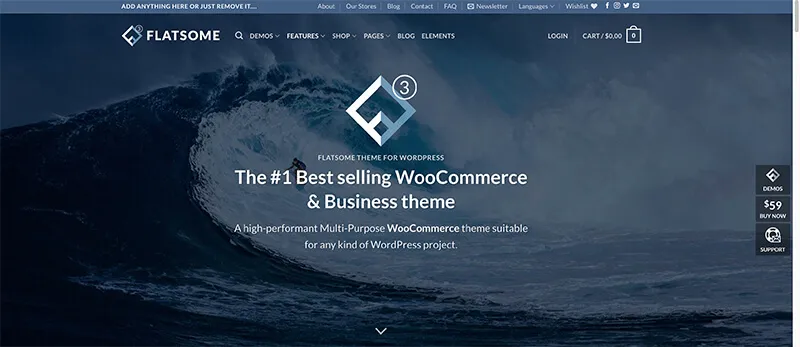
Flatsome uses its own UX Builder, which is designed to be straightforward to learn. The interface is clean, responsive, and logically organised, making it easy to build pages even if you’re new to WordPress. For WooCommerce stores, you can customize banners, product grids, categories, and promotional sections without relying on additional plugins.
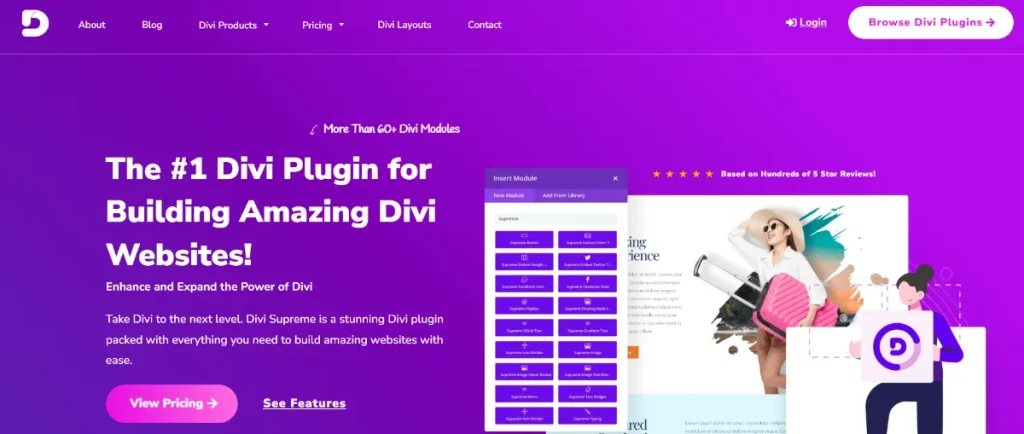
Divi takes a different approach. Its visual builder offers far more customisation options, including animations and hover effects, responsive controls, and advanced styling. That flexibility is valuable for experienced users, but it also comes with a steeper learning curve.
If your priority is getting a website online quickly with minimal training, Flatsome is the better choice. Divi is a better fit for users who value design flexibility over simplicity.
2.2 Design and Customization
Both Flatsome and Divi offer extensive customization options, but they’re designed for different workflows.
Flatsome focuses on efficiency. Its ready-made demos are tailored mainly for WooCommerce stores, making it easy to launch an online shop with minimal adjustments. The built-in UX Builder includes practical elements like banners, sliders, product grids, galleries, and testimonials, allowing you to create professional layouts without starting from scratch.
Divi puts flexibility first. Its visual builder gives you precise control over almost every design element, including typography, spacing, animations, responsive layouts, and global styles. Combined with a large library of pre-built templates, Divi is well-suited for agencies, freelancers, and users building a wide variety of websites.
If you want to quickly create a polished WooCommerce store, Flatsome offers a more streamlined workflow. If design flexibility is your priority, Divi provides more creative freedom.
2.3 Performance
Performance is one of the biggest factors in the Flatsome vs Divi comparison, especially for WooCommerce websites where every second of loading time can affect user experience and conversions.
Flatsome is built with performance in mind. Its lightweight codebase and WooCommerce-focused architecture help reduce unnecessary CSS and JavaScript, allowing pages to load quickly without relying on multiple optimization plugins. For most online stores, achieving good Core Web Vitals is relatively straightforward with basic caching and image optimization.
Divi has made significant progress in recent years by introducing features like dynamic CSS, deferred JavaScript, and smarter asset loading. These improvements have narrowed the performance gap, but Divi’s extensive design options can still result in larger pages when layouts include numerous modules, animations, or visual effects.
| Metric | Flatsome | Divi |
| Lightweight Code | ✅ Excellent | ✅ Good |
| CSS & JavaScript | Smaller | Larger |
| Core Web Vitals | Excellent | Very Good |
| Optimization Required | Low | Moderate |
| WooCommerce Performance | Excellent | Good |
If speed is a top priority, Flatsome generally delivers better performance with less optimization. Divi is fully capable of building fast websites, but it often requires more careful page design and performance tuning.
2.4 SEO Friendliness
A theme won’t determine your Google rankings, but it does provide the technical foundation for SEO. Clean code, mobile responsiveness, and compatibility with SEO plugins all contribute to a well-optimized website.
Both Flatsome and Divi follow modern WordPress standards and integrate seamlessly with popular SEO plugins such as Rank Math, Yoast SEO, and All in One SEO. The main difference is the amount of technical optimisation typically required after installation.
Flatsome generates clean, lightweight markup and integrates many WooCommerce features directly into the theme. This reduces reliance on additional plugins, making it easier to maintain a streamlined website with fewer compatibility issues.
Divi has also become much more SEO-friendly thanks to improvements in code output and asset loading. However, because its builder offers extensive design flexibility, pages with numerous modules, animations, or advanced effects may require extra optimization to maintain strong SEO performance.
| SEO Factor | Flatsome | Divi |
| Responsive Design | ✅ | ✅ |
| Compatible with SEO Plugins | ✅ | ✅ |
| Schema Support | ✅ | ✅ |
| Clean HTML Structure | Excellent | Very Good |
| Technical SEO Setup | Easier | Slightly More Involved |
Both themes provide a solid SEO foundation. If you want to spend less time on technical optimization—particularly for a WooCommerce store—Flatsome offers a slight advantage.
2.5 WooCommerce Experience
WooCommerce is where the biggest difference in the Flatsome vs Divi comparison becomes apparent. While both themes support WooCommerce, only Flatsome was built specifically for online stores.
Flatsome includes many eCommerce features out of the box, such as live product search, AJAX filters, Quick View, Sticky Add to Cart, optimized product galleries, and flexible shop layouts. Because these features are Built-Into the theme, you can create a fully functional online store with fewer third-party plugins and less configuration.
Divi also integrates well with WooCommerce through dedicated builder modules, making it easy to customize product pages, shop archives, and checkout layouts. However, features like advanced product filtering, Quick View, or AJAX search typically require additional plugins, depending on your store’s requirements.
| Feature | Flatsome | Divi |
| Built for WooCommerce | ✅ | ❌ |
| Product Layouts | ✅ | ✅ |
| AJAX Search | Built-In | Plugin Required |
| Quick View | Built-In | Plugin Required |
| Shop Filters | Built-In | Plugin Required |
| Product Page Builder | ✅ | ✅ |
If you’re building an online store, Flatsome offers a more complete WooCommerce experience with fewer plugins and a faster setup process.
2.6 Updates, Support & Community
A WordPress theme is a long-term investment, so regular updates and reliable support are just as important as features.
Both Flatsome and Divi are actively maintained and receive frequent updates to ensure compatibility with the latest versions of WordPress and WooCommerce. They also provide detailed documentation, making it easy to find guides for installation, customization, and troubleshooting.
Where Divi stands out is its larger ecosystem. Backed by Elegant Themes, it has an extensive collection of tutorials, third-party extensions, child themes, and an active user community. Flatsome’s community is smaller but highly focused on WooCommerce, making it easier to find resources for e-commerce and store optimization.
In terms of long-term reliability, both themes are excellent choices. The better option depends less on update frequency and more on whether you need a specialized WooCommerce theme or a versatile design platform.
2.7 Key Strengths and Trade-offs
By now, the differences between Flatsome vs Divi should be clear. Both are excellent WordPress themes, but they’re designed with different priorities in mind.
Flatsome
Flatsome stands out for its WooCommerce-first approach. It combines a lightweight codebase with built-in eCommerce features, making it easier to build a fast, user-friendly online store without relying on multiple plugins. Its streamlined UX Builder is also easy to learn, helping beginners get a store online quickly.
The main trade-off is flexibility. While Flatsome offers plenty of customization options, it’s primarily optimized for WooCommerce rather than highly creative or design-heavy websites.
Divi
Divi’s biggest strength is its flexibility. Its visual builder and extensive template library make it suitable for almost any type of website, from business sites to portfolios and landing pages. It’s an excellent choice for users who want complete control over their site’s design.
The downside is that this flexibility comes with a steeper learning curve and may require more optimization, especially for larger websites or complex layouts.
Overall
If you’re building a WooCommerce store, Flatsome is the more practical choice. If your priority is design freedom across different types of websites, Divi offers greater flexibility.
Mid-Article Verdict
At this stage of the Flatsome vs Divi comparison, a clear pattern is emerging.
Flatsome consistently performs better in areas that matter most to WooCommerce store owners. It’s lightweight, easy to use, and includes many built-in eCommerce features that reduce the need for additional plugins.
Divi, meanwhile, shines in design flexibility. Its visual builder offers far more creative control, making it a better fit for agencies, freelancers, and businesses that build different types of websites rather than focusing solely on online stores.
Neither theme is objectively better. They simply solve different problems, which is why understanding your project’s goals is more important than comparing feature lists.
3. Which Theme Should You Choose?
By now, you’ve probably noticed that there isn’t a single winner in the Flatsome vs Divi comparison. Both themes are mature, actively maintained, and capable of building professional WordPress websites.
The better choice depends on what you expect your website to do.
3.1 When to Choose Flatsome
Flatsome is the better option if your website revolves around WooCommerce.
It combines strong performance with features that online stores actually use every day, such as AJAX search, customizable product layouts, and a builder designed specifically for eCommerce. Because so many shopping features are Built-Into the theme, you’ll often need fewer plugins, which also makes long-term maintenance easier.
Flatsome is also a smart choice if you value speed and simplicity. The UX Builder is straightforward to learn, and most users can create a polished storefront without spending days exploring advanced settings.
3.2 When to Choose Divi
Divi is a better fit when flexibility matters more than specialization.
If you build websites for different clients, create landing pages, or regularly work on projects outside WooCommerce, Divi’s visual builder gives you far more creative freedom. Its extensive template library and advanced design controls make it easy to create websites that look completely different from one another.
Just keep in mind that this flexibility often comes with a more involved setup and a greater need for performance optimization.
3.3 Recommended by Use Case
If you’re deciding between Flatsome vs Divi for an online store, Flatsome is the theme we’d recommend. It offers a faster workflow, stronger WooCommerce integration, and better out-of-the-box performance.
If you’re building a business website, portfolio, agency site, or any project where design flexibility is the priority, Divi remains one of the strongest all-purpose WordPress themes available.
In short:
| Your Priority | Recommended Theme |
| WooCommerce store | Flatsome |
| Website speed | Flatsome |
| Simple editing experience | Flatsome |
| Highly customized designs | Divi |
| Agency or client websites | Divi |
| One theme for many project types | Divi |
4. Frequently Asked Questions
1. Is Flatsome faster than Divi?
Generally, yes. Flatsome has a lighter codebase and is optimised for WooCommerce, so it often delivers faster load times with less optimisation. Divi can also perform well, but it typically requires more careful tuning.
2. Is Flatsome better for WooCommerce?
For most online stores, yes. Flatsome was built specifically for WooCommerce and includes features such as AJAX search, Quick View, and optimised shop layouts, reducing the need for additional plugins.
3. Which theme is better for beginners?
Flatsome is generally easier to learn thanks to its streamlined UX Builder. Divi offers greater design flexibility but has a steeper learning curve.
4. How much does Flatsome vs Divi cost on PluginPro?
On PluginPro, both Flatsome and Divi are available for $4.50 each. If you plan to download multiple themes or plugins, the Membership plan offers much better value, giving you access to the entire library for a single subscription.
5. Can you switch from Divi to Flatsome later?
Yes, but expect to rebuild some layouts. Since Divi uses its own visual builder, switching themes may require recreating pages to match the original design.
5. Conclusion
The Flatsome vs Divi comparison isn’t about deciding which theme has more features; it’s about choosing the one that fits your workflow and website goals.
If you’re building an online store, Flatsome stands out for its speed, streamlined WooCommerce experience, and practical set of built-in eCommerce tools. It helps you launch faster, reduces reliance on extra plugins, and is easier to maintain as your store grows.
Divi takes a different approach. Its visual builder and extensive design options make it a strong choice for users who need maximum creative freedom or regularly build different types of websites.
For most WooCommerce projects, Flatsome is the more practical choice. For agencies, freelancers, and businesses that prioritise design flexibility, Divi remains one of the best all-purpose WordPress themes available.
If you’re building a WooCommerce store, Flatsome is the stronger choice thanks to its speed, built-in eCommerce features, and streamlined workflow. If flexibility and advanced design customization matter more, Divi remains an excellent all-purpose theme.
Both themes are available on PluginPro for $4.50, and if you download themes or plugins regularly, the Membership plan offers the best overall value.